

Introduction
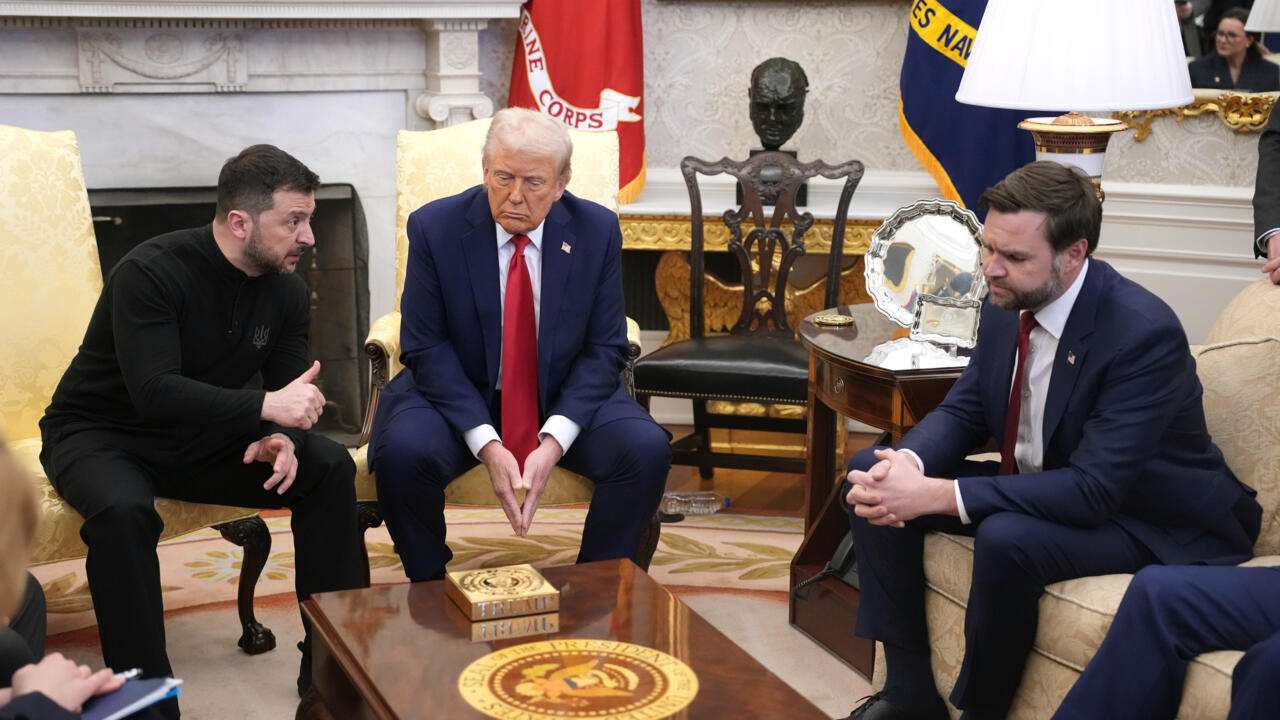
This past weekend’s explosive Oval Office meeting between President Donald Trump and Ukrainian President Volodymyr Zelensky became one of the most extraordinary moments in recent geopolitical history—at least, that is how the viral footage and transcript portray it. What was supposed to be a routine public press appearance and the signing of a much-anticipated minerals deal quickly devolved into a live, unfiltered exchange of accusations and hostility. Zelensky, visibly tense and combative, was ultimately asked to leave before any accord could be inked.
From that dramatic clash, new questions have emerged about Ukraine’s survival, Russia’s aims, and Europe’s strategies. Even more striking is the personal and political downfall of Volodymyr Zelensky—once heralded by many Western media outlets as a heroic wartime leader. Now, with U.S. support seemingly evaporating under Trump 2.0 and a resurgent Russia, we are left to ask: What’s next for Ukraine, Russia, and the broader geopolitics of Eastern Europe?
- The Oval Office Face-Off: What Really Happened?
>From Courtesies to Conflict
Initial snippets of the 45–50-minute session circulated on social media, giving the impression that Zelensky had been deliberately ambushed or humiliated by President Trump and Vice President JD Vance. However, the full recording tells a more nuanced story. Trump greeted Zelensky with standard diplomatic warmth—speaking of how it was an “honor” to host him. But as the briefing continued, it became apparent that Zelensky was not in a cooperative or deferential mood.
Whether fueled by frustration, a belief that some European leaders had his back, or other pressures, Zelensky appeared aggressive and provocative: interrupting his hosts, rolling his eyes, and even using unflattering language under his breath (allegedly calling the U.S. Vice President a derogatory Russian term). Public diplomacy typically demands respect and gentle maneuvering—especially in front of rolling cameras. Zelensky’s direct challenges to Trump and JD Vance crossed unspoken lines.
>The Minerals Deal That Wasn’t
One key agenda item was the signing of a deal to hand over certain mining and mineral concessions in Ukraine to American interests in partial repayment for Washington’s three years (over 300 billion dollars) of military aid. Such resource-for-aid agreements are not uncommon—but they usually happen behind closed doors. By bringing tensions to the cameras, Zelensky jeopardized finalizing the agreement.
Instead of concluding with handshakes and smiling photo ops, the world watched as Zelensky was asked to leave the White House altogether. These scenes of open discord were a stark contrast to the routine cordiality typical of high-level visits.
- The Domestic and Personal Fallout for Zelensky >A Leader in Free Fall
The same Western media that once lionized Zelensky as the defender of democracy now sees a leader apparently burned by his own overreach. If the transcript and footage are to be believed, Zelensky launched personal attacks on his hosts—an unthinkable breach of diplomatic protocol.
Zelensky’s position has long been precarious:
- Illegitimacy Accusations: Critics label him a “dictator” given he extended his presidency and postponed elections.
- National Desperation: With Ukraine’s military manpower waning, infrastructure battered, and billions of dollars in debt to foreign backers, Zelensky’s power leans heavily on Western goodwill.
Now that the U.S. administration is openly frustrated, Zelensky’s entire presidency faces an existential threat. He may try to seek refuge in a European capital—assuming, of course, the EU would still welcome a politically toxic figure.
>Living at the Mercy of Great Powers
Despite the moral complexities and the tragedy of war, geopolitics rarely reward defiance without leverage. Zelensky, as many analysts note, “is breathing at the pleasure” of Western capitals. Once Washington cuts off the military pipeline, Ukraine cannot stand on its own militarily against Russia’s far greater might. Zelensky’s public falling-out with the U.S. effectively removes any safety net.
- The Wider Geopolitical Landscape: Winners, Losers, and Uncertainties >Russia’s Endgame
From the outset of the conflict, Russia’s goal was to prevent NATO’s further encroachment and secure favorable territorial “buffers” in Eastern Ukraine. Many observers argue that Russia deliberately conducted a “slow-war strategy”—using only a fraction of its full capabilities. By doing so, President Putin wore down both Ukrainian forces and Western resolve.
- Territorial Gains: The reality on the ground suggests that Russia will likely retain the areas it has seized or consolidated control over since 2022.
- Negotiations with the U.S.: With Trump signaling he wants the war ended swiftly, expect direct U.S.-Russia negotiations—leaving Kyiv largely out of the room. Ukraine’s fate, in effect, becomes a bargaining chip between Washington and Moscow.
>The EU’s Dilemma and Discord
Why are many European leaders still verbally supporting Zelensky even as the U.S. withdraws active support? Part of it is performative outrage—issuing statements and tweets costs very little. EU leaders have been closely aligned with the previous U.S. administration (Democratic and establishment elements) and have their own domestic narratives about “standing for democracy.”
However, words do not translate into the sustained military and financial support Ukraine needs. Europe simply does not possess the industrial base to provide the huge flow of arms and money that the U.S. did for years. The EU is thus stuck: offering rhetorical backing to Zelensky yet quietly recognizing that, without American involvement, Ukrainian forces cannot hold out.
>The U.S.: Ending the War to Move On
President Trump campaigned on promises to scale back America’s foreign entanglements and focus on domestic renewal. Ending the Ukraine war is a logical step:
- Cost of War: American taxpayer money funding a proxy conflict in Eastern Europe has become unpopular among large segments of the U.S. electorate.
- Focus on Domestic Priorities: Trump has begun redirecting resources and policy attention to immigration, infrastructure, and re-industrializing the U.S.
- Global Competition: The administration’s broader strategic interest lies in balancing power with China and reasserting leadership elsewhere, not sinking billions more into a stalemated war.
Thus, cutting Zelensky loose—and dealing directly with Putin—may be viewed in Washington as the surest route to a “win” that lets the White House claim it ended a grinding, expensive conflict.
- The Future of Ukraine, Russia, and Eastern Europe >Partition or Peace?
Realistically, Ukraine may face de facto partition—with Russia officially keeping territories in the east and south, while a new regime in Kyiv governs what is left. The moral tragedy of a smaller Ukraine and the immense human cost are devastating. Yet, from a power-politics perspective, neither Washington nor Moscow sees a benefit to continuing the bloodshed indefinitely.
>Regime Change in Kyiv
Zelensky’s political obituary is already being written. In negotiations, Russia will almost certainly demand new leadership in Kyiv that can credibly sign binding peace terms. The White House, meanwhile, is unlikely to object. The question becomes who will fill the vacuum and how a post-war Ukraine can rebuild without being torn into spheres of influence.
>A New Security Landscape
Once the smoke clears, Eastern Europe’s security architecture will be reset. NATO will reinforce its current members to the west of Ukraine. Russia will keep a wary eye on any further expansions. The EU will scramble to restore economic ties—particularly for energy—now that cheap Russian pipelines have been shut down or sanctioned. The ultimate shape of this arrangement will rest on further U.S.-Russia talks, with Europe finding itself more of a bystander than a main player.
- Lessons in Diplomacy (and Indiscretion) >Substance vs. Stagecraft
In normal diplomacy, the real arm-twisting happens behind closed doors. Leaders typically use public press events to display unity, maintain courtesy, and telegraph confidence. Zelensky’s decision to negotiate or grandstand live on camera—and to insult high-ranking U.S. officials—was a serious strategic blunder.
>The ‘Golden Rule’ of Negotiations
Donald Trump once quipped, “He who has the gold makes the rules.” Ukraine’s reliance on American funds and arms left Zelensky almost no leverage. Engaging in a confrontation with the very party underwriting one’s survival is akin to biting the hand that feeds—a maneuver bound to end disastrously.
> The Modi Contrasts
In recent weeks, Indian Prime Minister Narendra Modi visited Washington and showcased a starkly different approach: respect for the host, thorough behind-closed-doors discussions, and a mutual accommodation of “wins” that both sides could display. India walked away preserving its strategic autonomy and trade interests, while the U.S. could tout incremental successes. Zelensky’s clash stands in direct contrast—revealing just how critical diplomacy and tact are at such high levels.
Conclusion: A Post-Zelensky World?
Volodymyr Zelensky’s humiliating White House exit seems to mark the beginning of the end for his presidency and possibly his political survival. With U.S. aid drying up and European leaders offering little more than tweeted platitudes, Ukraine’s fate rests in the hands of Washington and Moscow alone.
We are witnessing one of those inflection points in geopolitics where alliances shift, proxies are discarded, and new power balances emerge. Ukraine, tragically, may see further territorial losses and find itself under new governance sooner rather than later. The EU faces an internal struggle to remain relevant amid a changing transatlantic relationship, while Russia capitalizes on a rare strategic opening.
Far from a mere personal fiasco, the confrontation in the Oval Office was symbolic of deeper structural shifts. It exposed how crucial leverage and diplomatic finesse are in a global system dominated by great-power politics. Zelensky’s mistake was believing he could publicly shame or pressure the U.S. into further support. Instead, he left empty-handed—and possibly exiled in the making.
The uneasy lesson for smaller nations is that, in a world still defined by hard power, aligning oneself too closely with a single patron can be fatal if that patron’s will or leadership changes. And as the White House doors slammed shut behind Zelensky, the entire post-Cold War security landscape in Eastern Europe may have begun rewriting itself—even before the cameras stopped rolling.