
The Claim
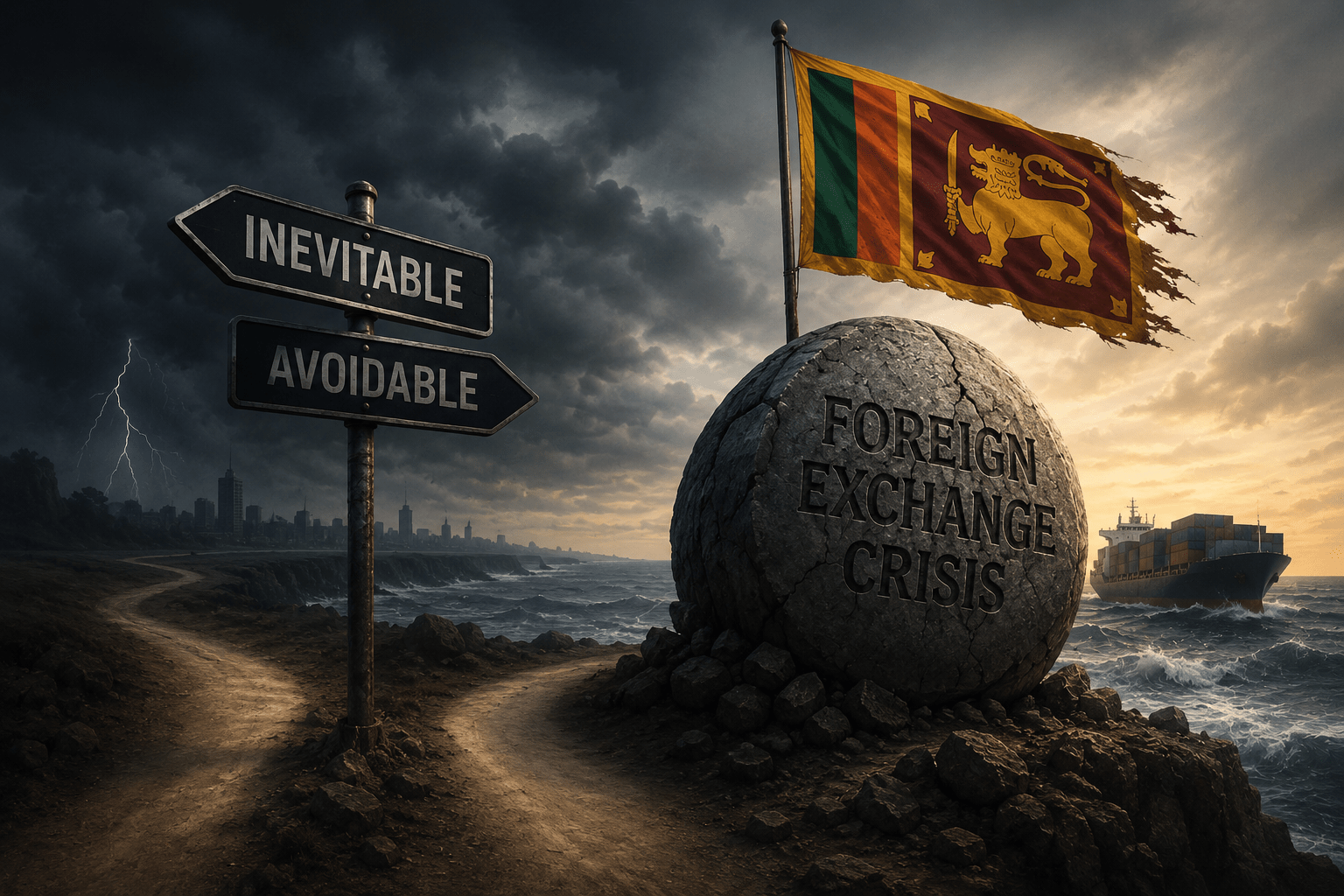
Sri Lanka’s foreign exchange crisis is often blamed on policy decisions taken after 2020.
The Reality
By the time the new government took office in November 2019, the economy was already fragile and exposed to external shocks.
The crisis did not begin in 2020. It was years in the making.
The Big Picture
Between 2014 and 2019, Sri Lanka’s macroeconomic fundamentals deteriorated sharply:
- Growth slowed and turned negative
- Debt increased rapidly
- External vulnerability deepened
- Foreign reserves failed to improve—despite heavy borrowing
The economy entered 2020 with very limited buffers
What Changed Between 2014 and 2019?
- Growth Collapsed
- 2014: 5.0% growth
- 2019: -0.2% contraction
An economy that is not growing cannot generate foreign exchange sustainably.
- Debt Increased Rapidly
- Total debt rose from 72% to 87% of GDP
- Foreign debt increased from 30% to 41% of GDP
This meant higher external repayment obligations in foreign currency
- Heavy Reliance on International Sovereign Bonds (ISBs)
- ISB stock increased from USD 5 billion to USD 15 billion
- Short maturities created rollover risk
Sri Lanka became more dependent on global financial markets to refinance debt
- Reserves Did Not Improve—Despite Borrowing
- 2014 reserves: USD 8.2 billion
- 2019 reserves: USD 7.6 billion
This is the critical puzzle: Sri Lanka borrowed heavily—but reserves did not increase.
This meant the country had less protection, not more.
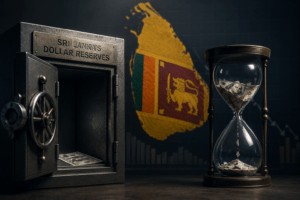
The Key Question
If Sri Lanka borrowed an additional USD 10 billion between 2015 and 2019…
Why were reserves lower in 2019 than in 2014?
What This Meant Going Into 2020
By end-2019, Sri Lanka faced:
- High external debt obligations
- Weak reserve buffers
- Dependence on external financing
- Limited ability to absorb shocks
In simple terms:
The economy was already vulnerable before the crisis hit.
The IMF Warning
This vulnerability was not unnoticed.
The IMF repeatedly flagged Sri Lanka as:
- Having “inadequate external buffers”
- Facing high refinancing risks
- Being vulnerable to shifts in global markets
By mid-2019, the IMF had already classified Sri Lanka as externally fragile
Why This Matters
This changes how we understand the crisis.
If the economy was already weak:
- External shocks (like COVID-19) would have disproportionate impact
- Even small disruptions could trigger major instability
The crisis was not created suddenly—it was triggered on top of existing weaknesses
The Bottom Line
Sri Lanka did not enter 2020 from a position of strength.
It entered with:
- Rising debt
- Weak reserves
- High exposure to external financing
The foreign exchange crisis was not born in 2020—it was set up before it.
Data Appendix
- Key Macroeconomic Indicators (2014 vs 2019)
| Indicator | 2014 | 2019 | Change |
|---|---|---|---|
| GDP Growth Rate | 5.0% | -0.2% | Shift to contraction |
| Budget Deficit (% of GDP) | 5.7% | 9.6% | Significant widening |
| Total Debt (% of GDP) | 72.3% | 86.9% | Sharp increase |
| Foreign Debt (% of GDP) | 30% | 41.3% | Rising external exposure |
| ISB Stock (USD) | 5.0 billion | 15.05 billion | Tripled |
| Gross Official Reserves (USD) | 8.2 billion | 7.6 billion | Declined |
| Per Capita GDP (USD) | 3,819 | 3,852 | Stagnant |
Source: Central Bank of Sri Lanka, Ministry of Finance
- International Sovereign Bond (ISB) Expansion
| Year | ISB Stock (USD Billion) |
|---|---|
| 2014 | 5.0 |
| 2019 | 15.05 |
Interpretation: Sri Lanka significantly increased reliance on international capital markets, exposing itself to refinancing risks.
- Reserves vs Borrowing (The Core Imbalance)
| Indicator | Value |
|---|---|
| Additional ISB borrowing (2015–2019) | ~USD 10 billion |
| Change in reserves (2014–2019) | -USD 566 million |
Key Insight: Despite large-scale borrowing, reserves did not increase—indicating weak reserve management.
- IMF Risk Assessment (Pre-2020)
| Risk Factor | IMF Assessment |
|---|---|
| External buffers | Inadequate |
| Debt profile | High refinancing risk |
| Market exposure | Vulnerable to external sentiment |
Interpretation: Sri Lanka was already identified as externally vulnerable before the pandemic.
How to Read This
These data points show that:
- The crisis conditions were already present before 2020
- External shocks later exposed and amplified these weaknesses